
Not All Heroes Wear Capes
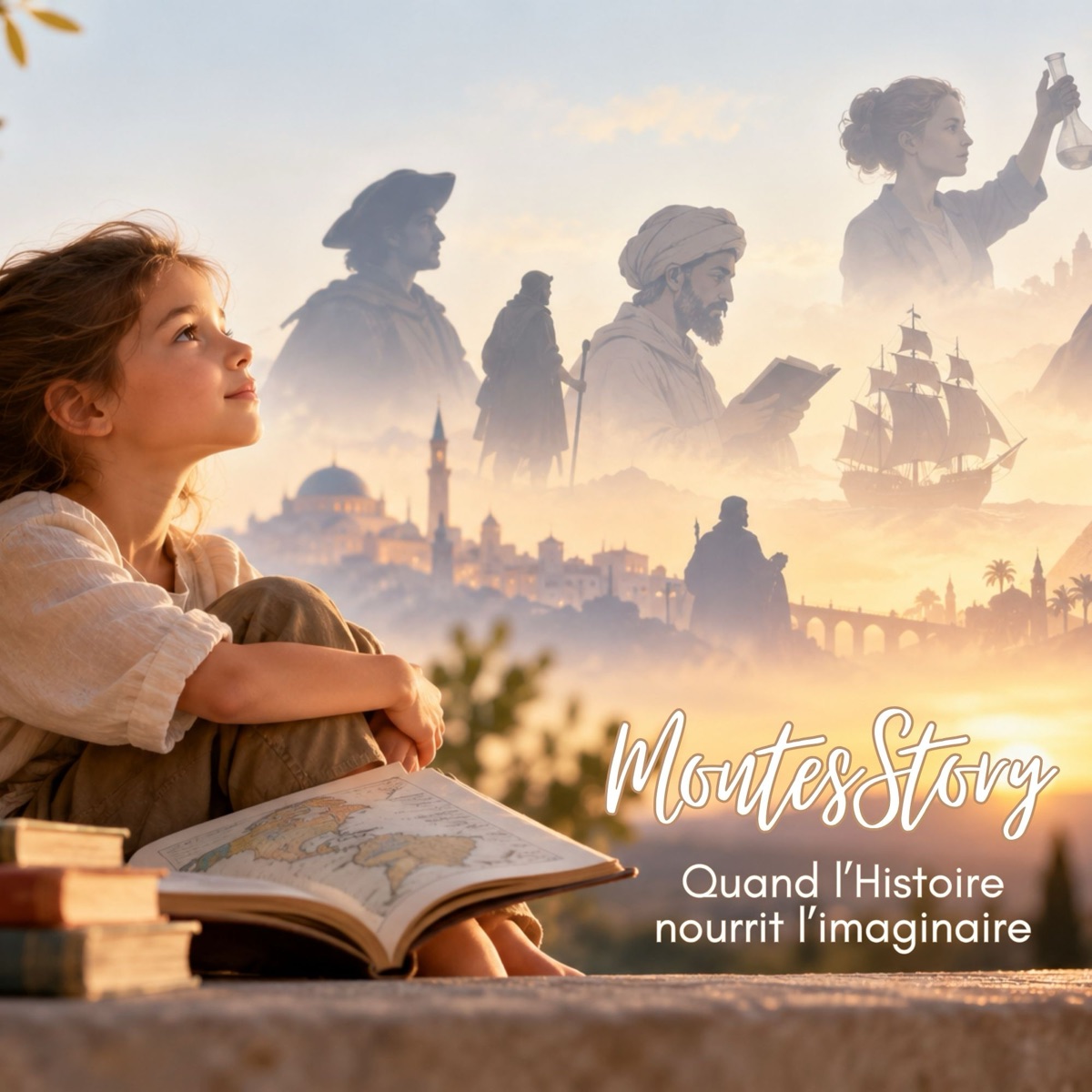
Why children need inspiring figures, far beyond screens — the Montessori pedagogy’s perspective.
Children need role models
Maria Montessori observed that children aged 6 to 12 begin to look for role models outside their family. It is the age when they project themselves onto figures bigger than themselves, sometimes real, sometimes fictional.
Today, these figures often take the form of superheroes like Spider-Man, or fictional characters like Harry Potter or Luke Skywalker. And these stories matter: they feed the imagination, support the building of identity and make children want to surpass themselves.
But Montessori pedagogy proposes going further. It invites us to show children that heroes don’t only live on screens or in books: they existed, they still exist… and sometimes they are much closer than we imagine.
When History feeds the imagination
Baghdad, in the 10th century, was a centre of knowledge, a beacon of culture and science. Destroyed by the Mongols, the city nevertheless opened the way to a century and a half of peace and trade, during which human civilisation grew by leaps and bounds.
The French Revolution abolished privileges and proclaimed the rights of man, before sinking into the Terror a few years later.
These stories show children that History is never simple or smooth. It is made of light and shadow, progress and mistakes. And it is precisely this complexity that makes it deeply human… and inspiring.
Heroes of flesh and blood
Children can draw inspiration from great historical figures:
- scholars like Eratosthenes, who measured the circumference of the Earth more than 2,000 years ago… without satellites, without GPS, with just observation and reasoning,
- scientists like Marie Curie,
- explorers like Magellan or Ibn Battuta,
- philosophers like Avicenna,
- writers like Victor Hugo.
These people really existed. And that changes everything.
Hearing about Amundsen’s expeditions doesn’t have the same impact as reading an invented adventure. It’s a bit like using a real knife to cut vegetables, rather than cutting modelling clay: the action takes on meaning, weight, reality.
But Montessori doesn’t stop at the “big names”. The message is more subtle: heroism is not reserved for famous figures. Courage, commitment and perseverance can also be found in a teacher, a nurse, a parent, a neighbour… sometimes even at the foot of our own building.
Living alongside them, feeling alongside them
In this approach, it isn’t only about telling of battles or listing exploits. An essential place is given to everyday life:
- How did children live in the past?
- What difficulties did they face?
- What were their hopes, their fears, their joys?
These stories allow children to feel:
- exhilaration at successes,
- sadness and compassion in the face of tragedy,
- and above all, that deep sense of kinship with the whole of humanity.
Modern Chinese people are not strangers, any more than the ancient Egyptians. By plunging into the lives of past civilisations – and the ordinary human beings who made them up – children discover that humanity is one, and that everyone has contributed their stone to it.
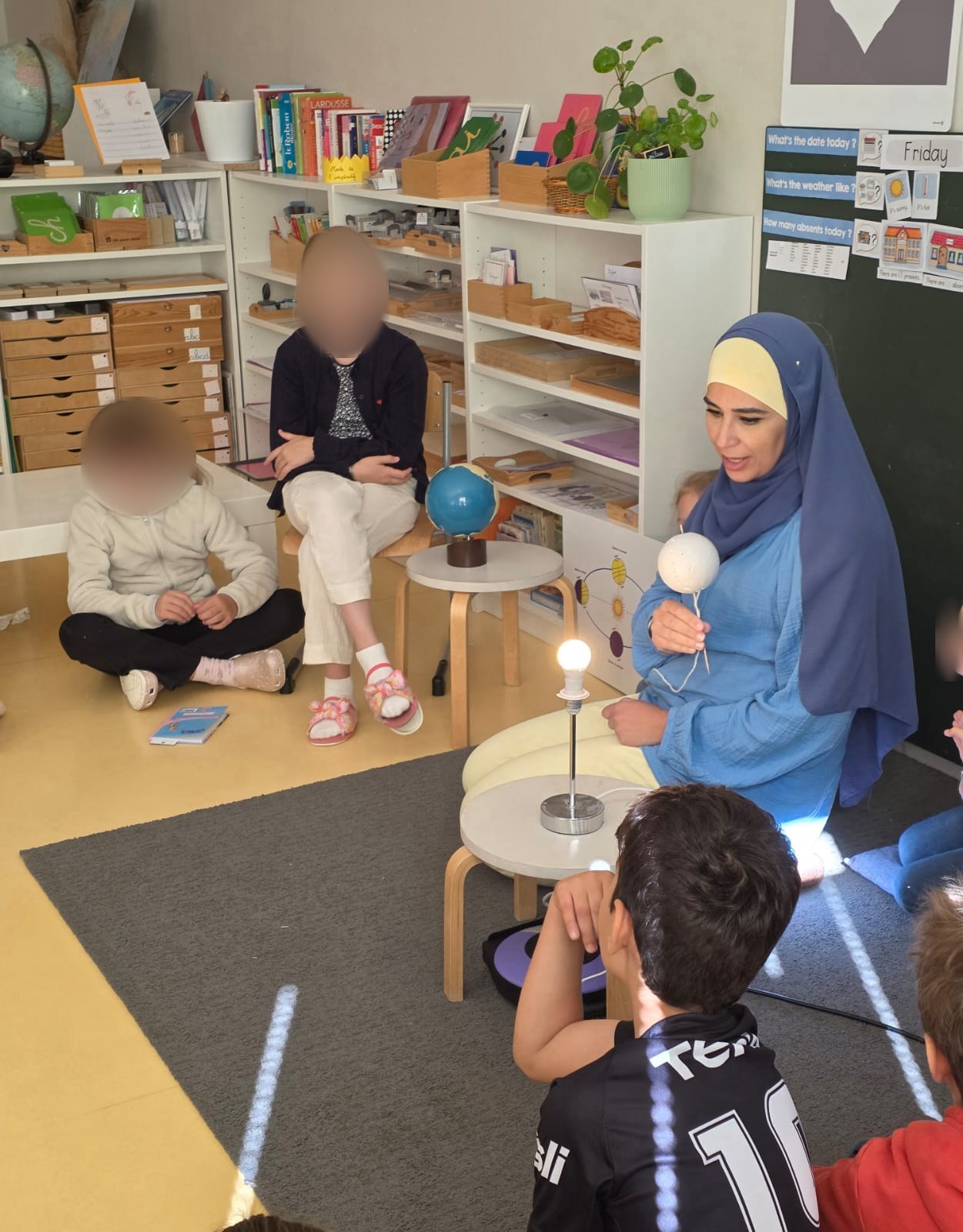
Planting seeds for tomorrow
By discovering these journeys, famous or anonymous, children are led to ask themselves an essential question:
What is my own civilisation doing, and what role can I play myself?
This is the whole point of the work of the third plane of development (ages 12–18). But for this reflection to blossom later, we must plant powerful seeds now, between the ages of 6 and 12.
And what about us adults?
That is why I created the “Inspiring Figures” section on this blog.
Because we adults, too, need positive figures. In a world where the news often inspires worry rather than momentum, these stories remind us that human beings are capable of courage, intelligence and beauty.
A hero is not someone out of reach.
Sometimes they are an ordinary person, making the right choices, where they are, with what they have.
And you, who is your inspiring hero?
Perhaps they live in a history book… or perhaps they live right next door.
— Bouchra