
Science at a Child’s Level: Understanding the Autumn Equinox
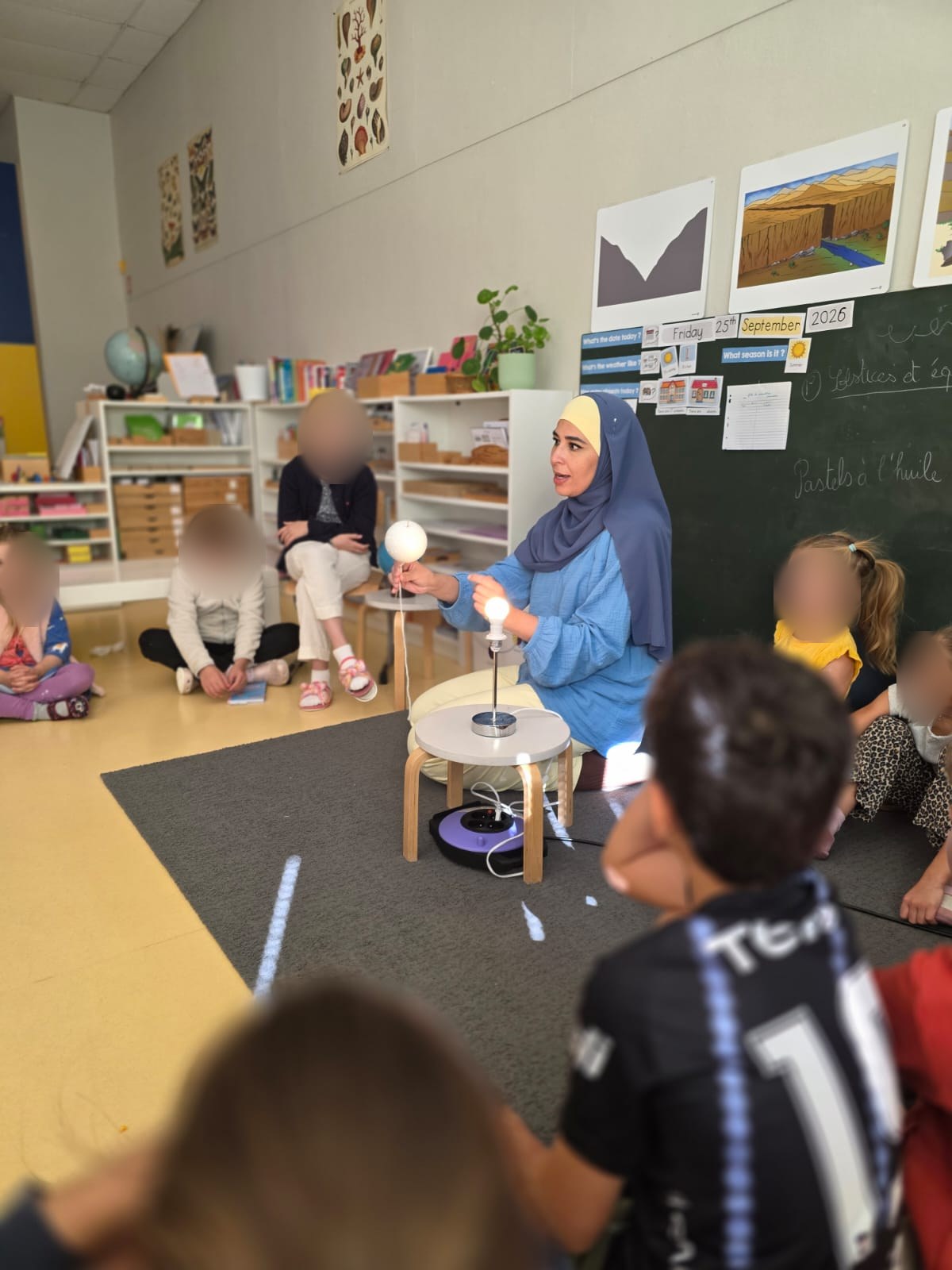
The autumn equinox marks a special moment of the year: day and night are almost equal in length.
In the northern hemisphere, it announces the start of astronomical autumn. Days gradually shorten, nights grow longer, temperatures begin to drop and nature changes.
But contrary to what you might think, this change is not due to the Earth moving away from the Sun. It is explained by a fascinating phenomenon: the tilt of the Earth’s axis and its movement around the Sun.
☀️ What the Earth really does
To explain the autumn equinox to children, I always start with simple facts.
The Earth spins on itself: this is rotation, which creates the alternation of day and night.
It also travels around the Sun: this is revolution, which, combined with the tilt of its axis, explains the seasons.
But there is one essential detail: the Earth’s axis is tilted by about 23.5°.
Throughout the year, this tilt changes the way the Sun’s rays reach the different regions of our planet.
At the moment of the autumn equinox, neither hemisphere is tilted more towards the Sun. The Sun is directly above the equator, and both hemispheres receive almost the same amount of sunlight.
That is why day and night each last approximately twelve hours.
From that moment, in the northern hemisphere, days keep getting shorter until the winter solstice. In the southern hemisphere, it is exactly the opposite: spring begins!
One astronomical phenomenon, two different seasons. Just the thing to spark children’s curiosity!
🌍 A lesson inspired by Maria Montessori
While preparing this presentation, an anecdote attributed to Maria Montessori came back to me.
The story goes that one day, when an earthquake struck, her son Mario was frightened. Maria did not play down his fear or simply try to distract him. She chose to explain the phenomenon to him, talking about the movements of the Earth and the natural forces at work beneath their feet.
Through understanding, she offered him another way of facing what scared him.
This anecdote, whose historical details remain to be verified, illustrates a deeply Montessorian conviction: children are capable of understanding far more than we imagine, provided we give them the means.
🌱 Two essential pillars of Montessori pedagogy
This approach illustrates two fundamental principles:
- Trust in the child’s intelligence, which can grasp complex phenomena when they are presented in a concrete, gradual way suited to their development.
- Cosmic education, which invites the child to discover the links between natural phenomena, to understand the laws that govern our universe and to become aware of their place in this great whole.
The autumn equinox thus becomes much more than a date on a calendar. It is an invitation to observe, to question and to connect what the child sees in their environment with the great movements of our planet.
🍁 Observing to understand
Explaining the autumn equinox doesn’t take away the magic of leaves changing colour or days growing shorter.
On the contrary, it gives children the keys to understand what they observe.
Why does it get dark earlier? Why are the seasons reversed between France and Australia? Why do trees lose their leaves?
So many questions that can become the starting point for wonderful discoveries.
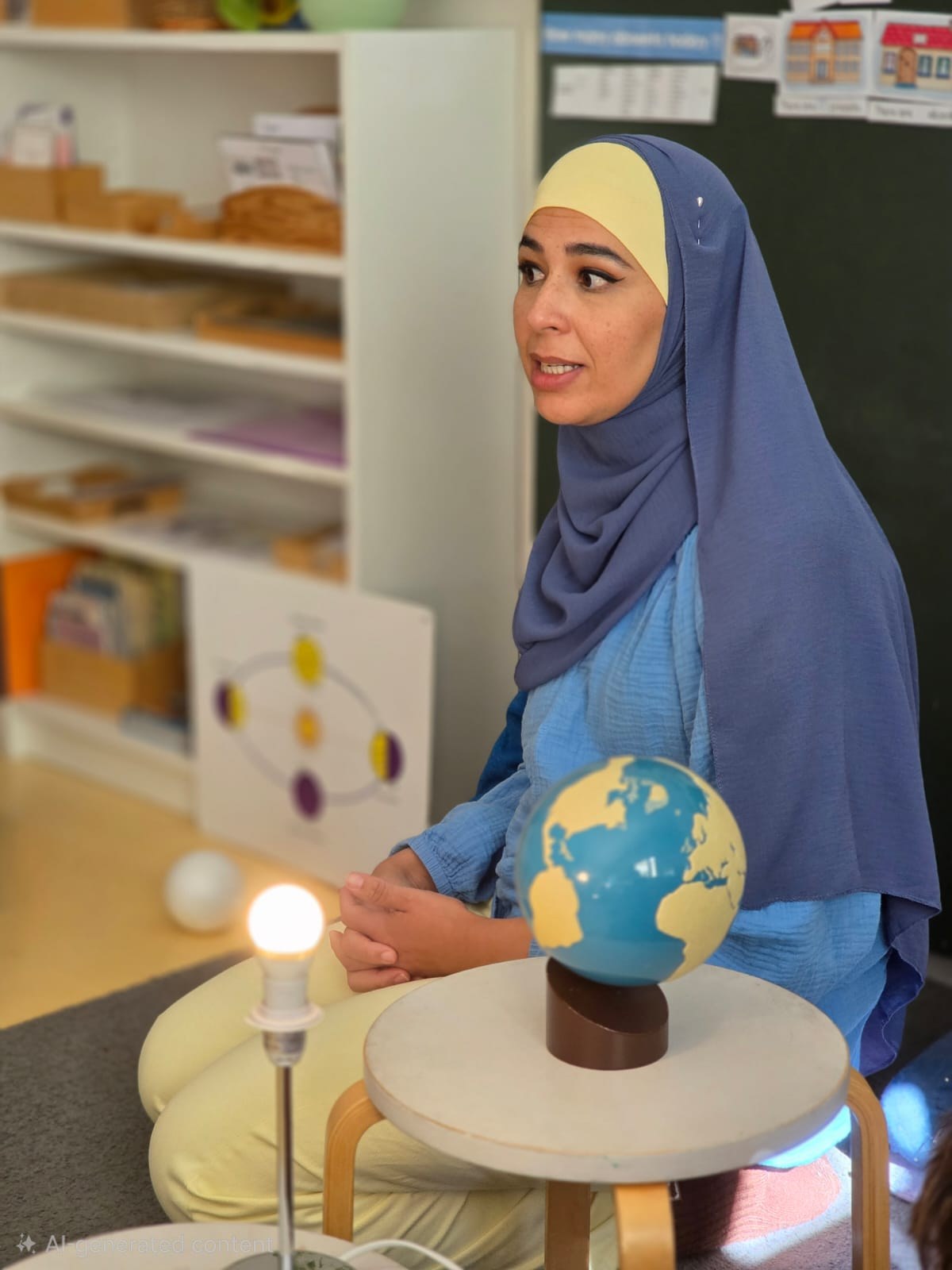
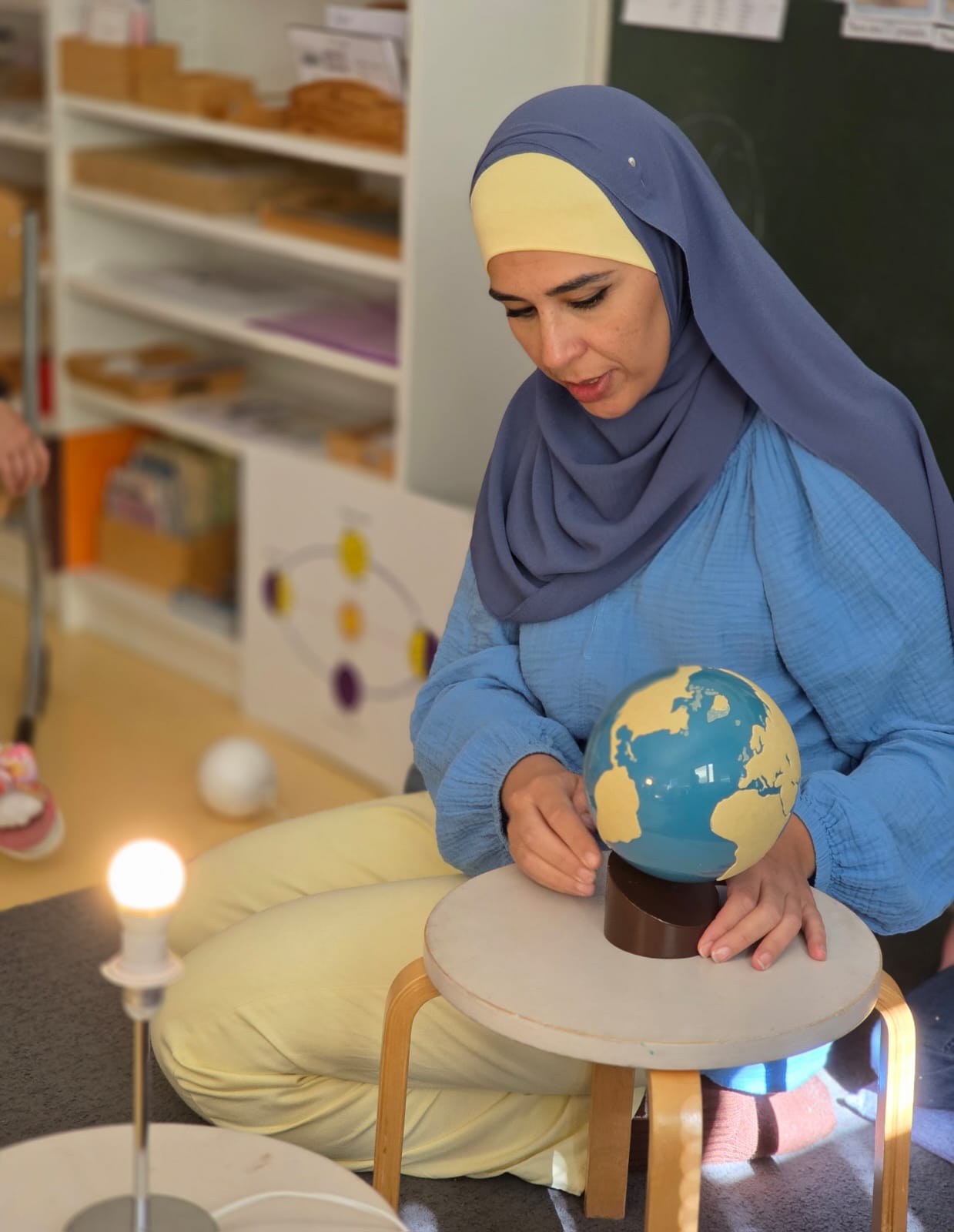
And no need for sophisticated equipment: a globe, a lamp standing in for the Sun and a few minutes of observation are enough to start exploring these phenomena together.
Because in Montessori pedagogy, understanding the world often begins with a very simple observation.
One small Montessori step every day. 🌿
💡 And you, what change do you notice with your child as autumn arrives?