
A Box, a Hole in the Garden… and a Class That Becomes a Group
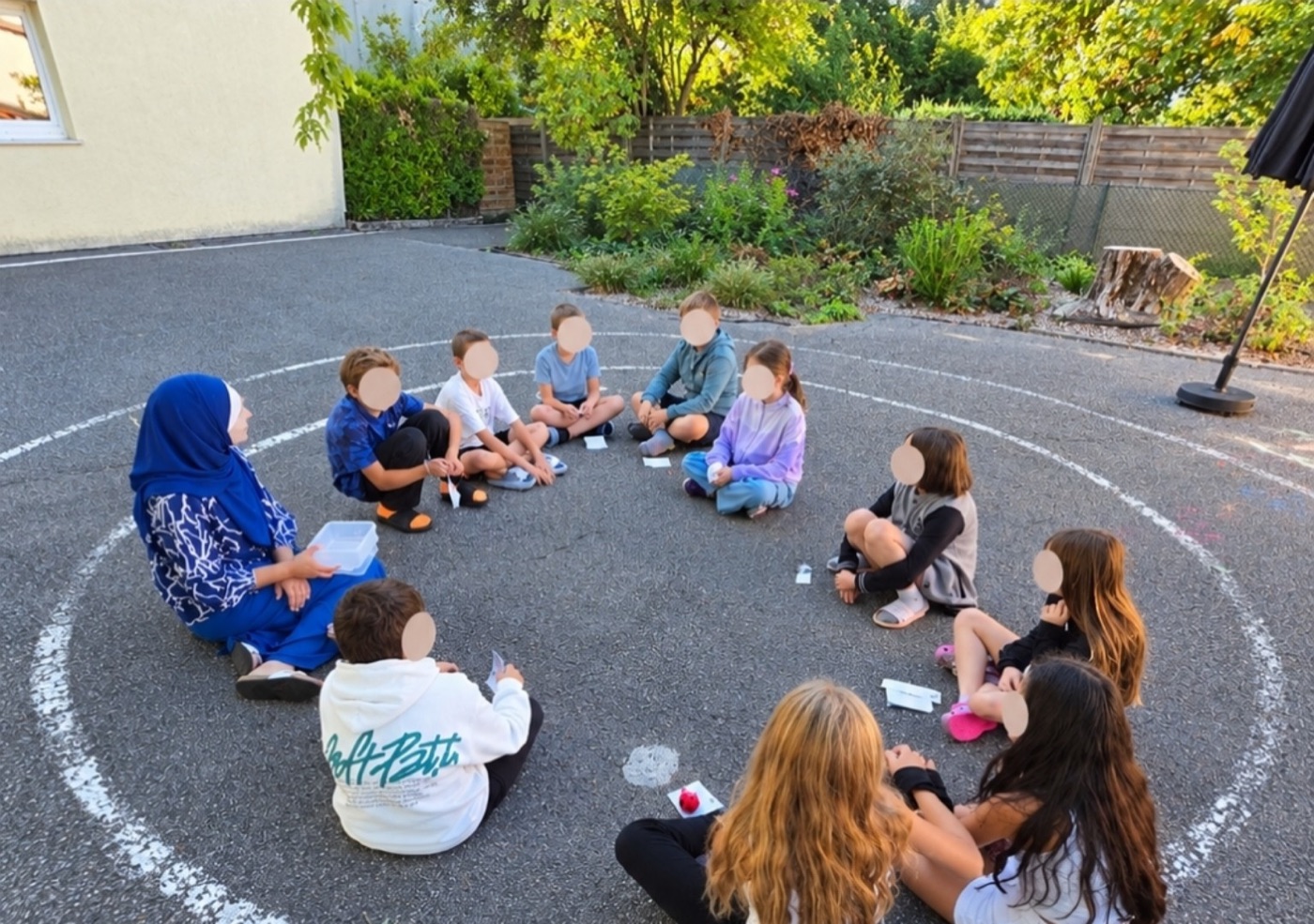
4 September 2026, 9:05 a.m. The morning sun lights up the yard. The students are sitting in a circle on the ground, a small piece of paper in their hands.
In the middle, nothing spectacular: a simple plastic box, on which I have just written “Time capsule” in marker.
And yet, that morning, something important is happening.
At the start of the school year, a class is first of all a collection of individuals. Some young people already know each other, others are arriving. Habits to pick up again, places to find, bonds to weave.
A group, though, cannot be decreed. It has to be built.
So how do we go from a class to a real group?
In adolescence, finding your place in the group becomes essential
Maria Montessori identified four great periods in human development, which she called the planes of development. Between 12 and 18, the adolescent goes through the third plane.
She saw this period as a true social birth. Having gradually built their individuality during childhood, adolescents now seek to find their place in society.
They want to belong to a group, to be recognised, to feel useful. They try to understand who they are, but also who they can become among others.
This period comes with deep physical, psychological and emotional upheavals. The gaze of others takes on enormous importance. Self-confidence can fluctuate, and the feeling of belonging becomes a real need.
How can we ask a teenager to invest fully in their learning if they don’t feel accepted, respected or recognised within their group?
For Maria Montessori, the education of the adolescent cannot be limited to passing on knowledge. It must also allow them to experience a real social life.
This includes collective projects, real responsibilities, cooperation, the chance to take part in decisions, and an environment in which everyone finds their place.
The adult supports this social construction without trying to control everything. They observe, support, guide when necessary and leave adolescents the freedom to experiment with their own relationships.
In my article on educating for peace, I already mentioned this essential idea in Montessori: we cannot hope to build a peaceful society by educating individuals to live in isolation from one another.
The cohesion of a group is therefore built day by day, through shared experiences.
And sometimes, it all starts with a simple box.
Our time capsule: a collective experience
The idea was very simple: to shut away in a box a small piece of our group as it exists today, so we could find it again a few years later.
No extraordinary equipment needed. A plastic box, a few papers, personal objects, small spades and a corner of the garden.
But behind this apparent simplicity lay a much richer experience.
1. Gathering in a circle
We settled in the yard, sitting in a circle.
No front row, no back row. Everyone could see everyone else, and I was sitting among the students.
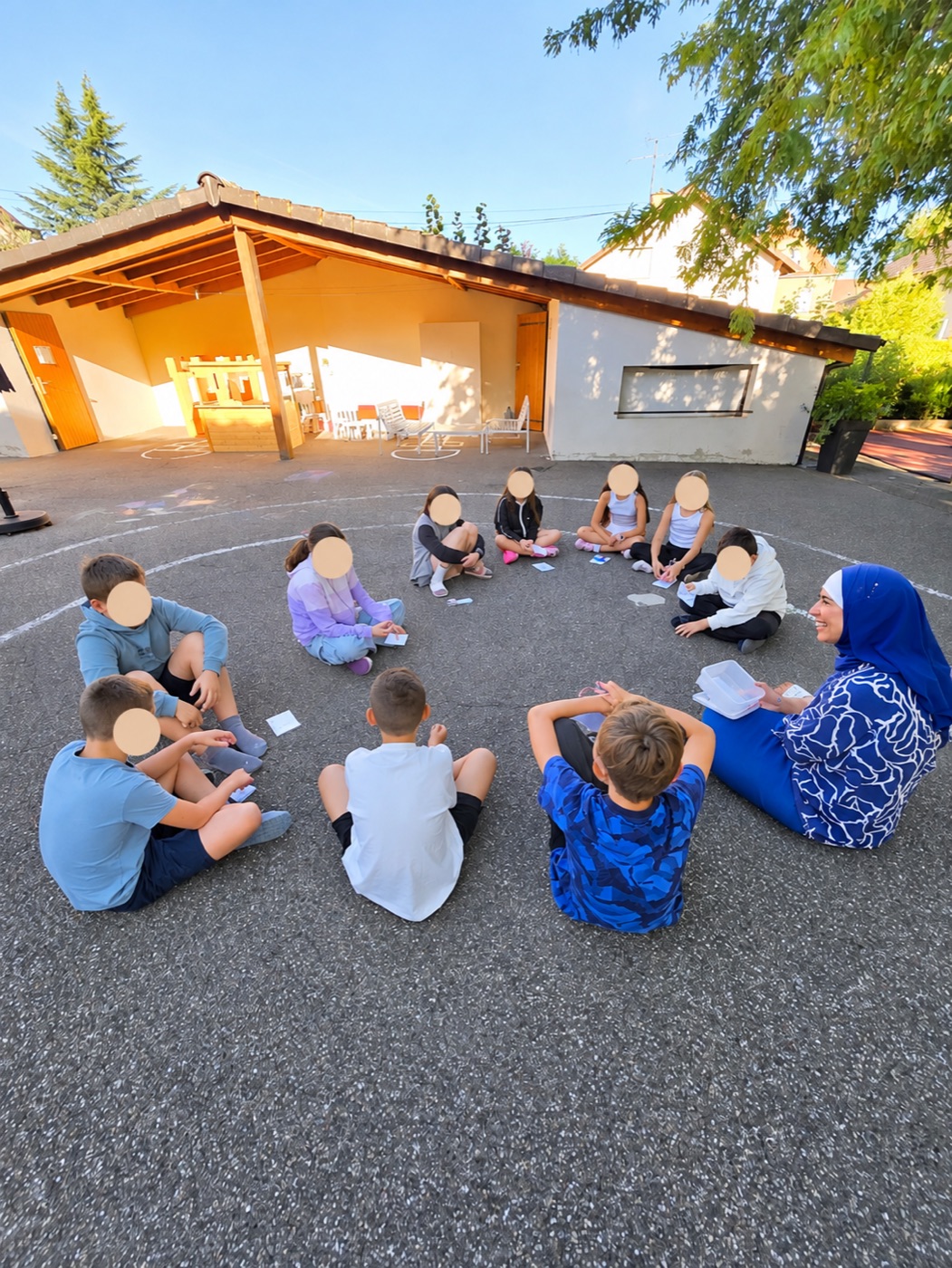
This choice was not trivial. The circle encourages exchange, listening and participation. It is also a symbolic reminder that every member of the group has a place.
2. Writing a message to your future self
Each student received a small piece of paper on which they could write a message to their future self.
A thought, a wish, a question, a memory… The content belonged entirely to them. Once their message was written, the students folded it.
I didn’t read anything.
This detail seems essential to me, particularly in adolescence. We often ask young people to trust us, but do we show them enough that we trust them in return?
Respecting their privacy also means recognising that they have a personal space the adult doesn’t systematically need to access.
3. Sharing an object that matters
Each student had also chosen an object that was dear to them.
One by one, they presented their object and explained why it was particularly important to them. The others listened.
This moment allowed everyone to reveal a small part of their personal world, their tastes, their memories or their story.
In a group, we sometimes tend to see others only through their behaviour in class. These moments of sharing remind us that a student is first and foremost a person, with a story that goes far beyond the school walls.
Then the objects and the messages joined our box.
4. Sealing a piece of our present
I wrote the exact date and time on the lid:
04/09/2026 — 9:05 a.m.
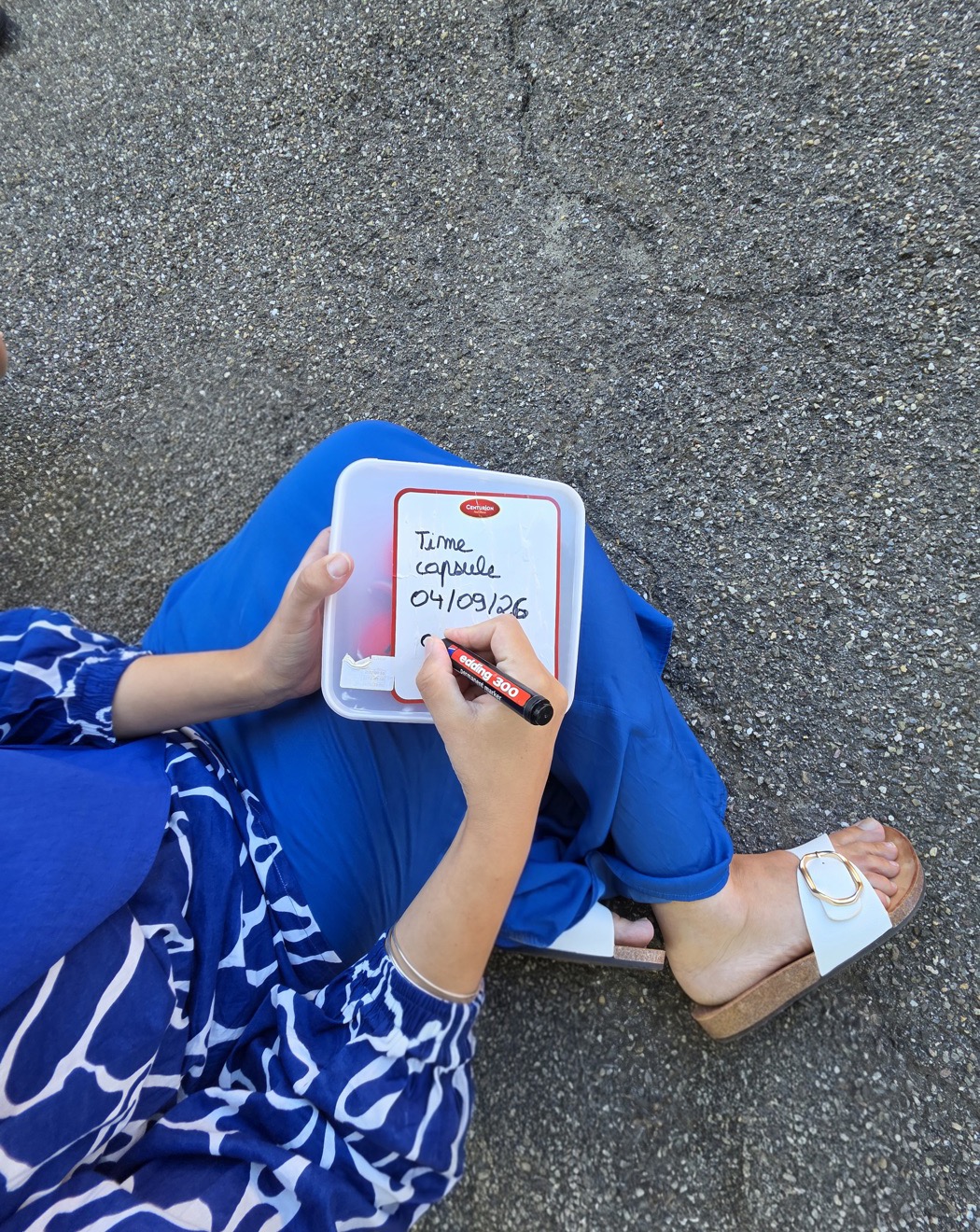
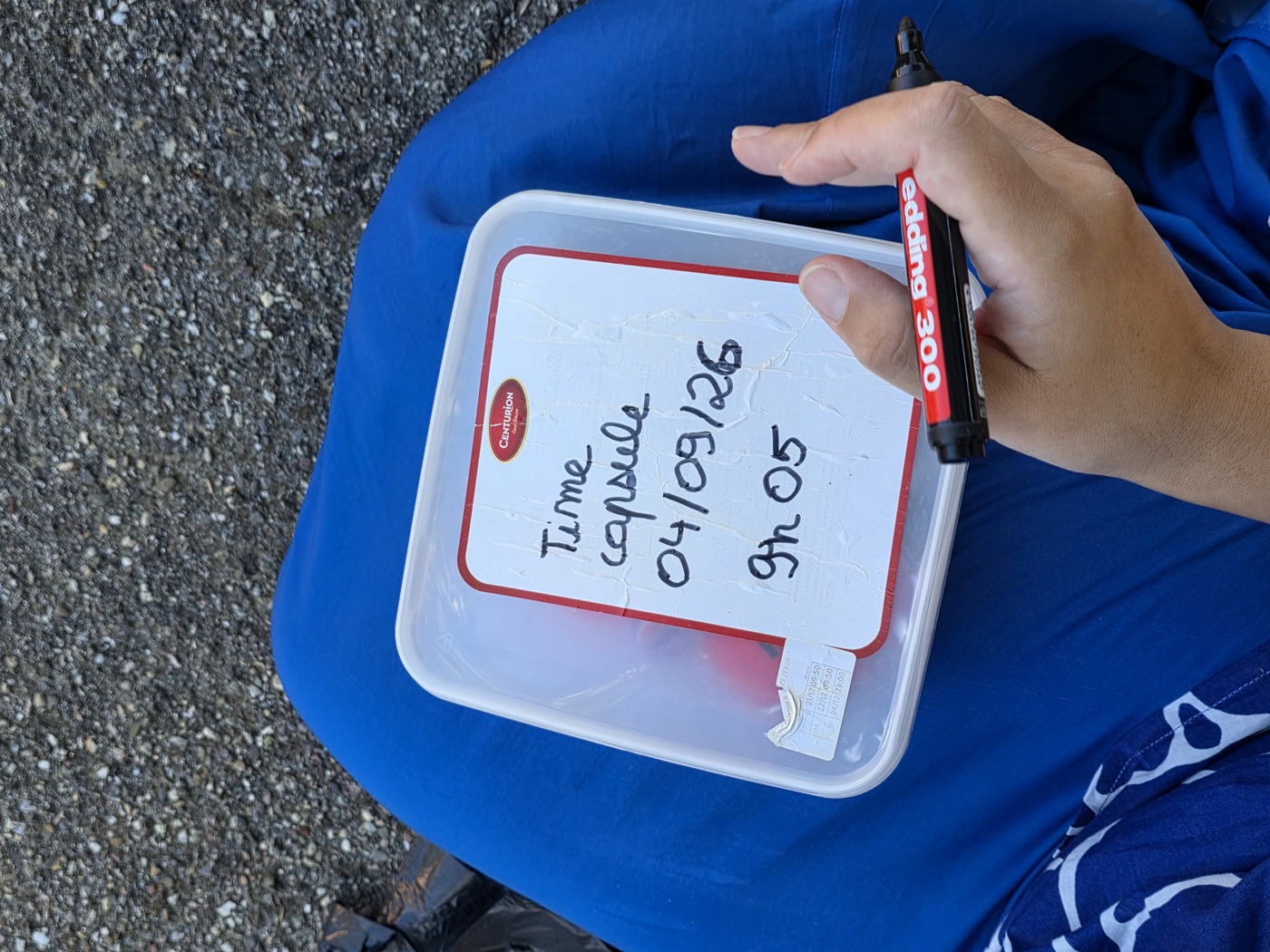
An almost administrative detail, but one that will surely take on a whole new dimension when we reopen this box.
We then carefully wrapped it to protect it from the damp.
5. Digging together
Off to the garden.
At the foot of a young tree, the students began to dig. The small spades passed from hand to hand. Some dug, others watched, gave advice or waited for their turn.
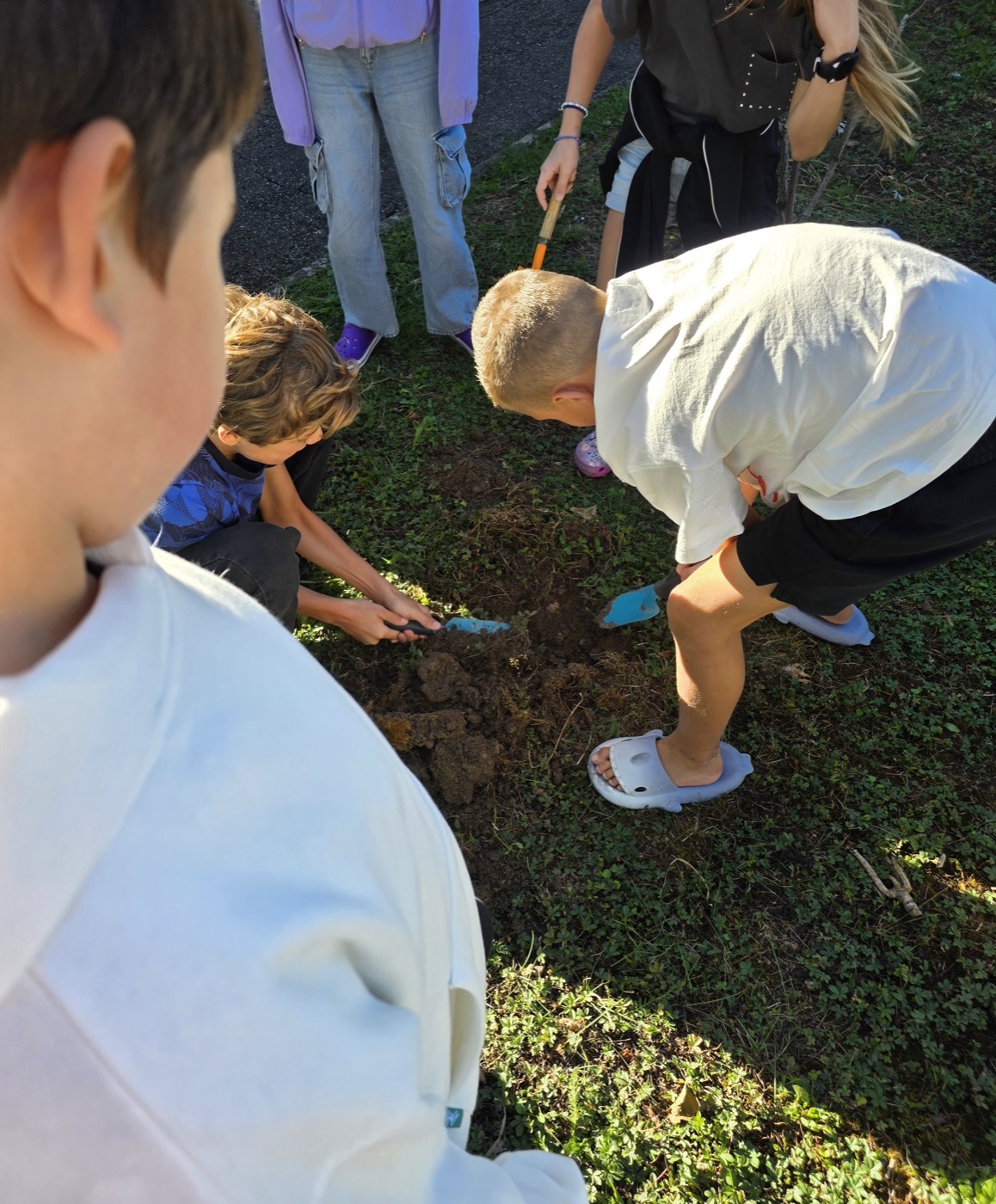
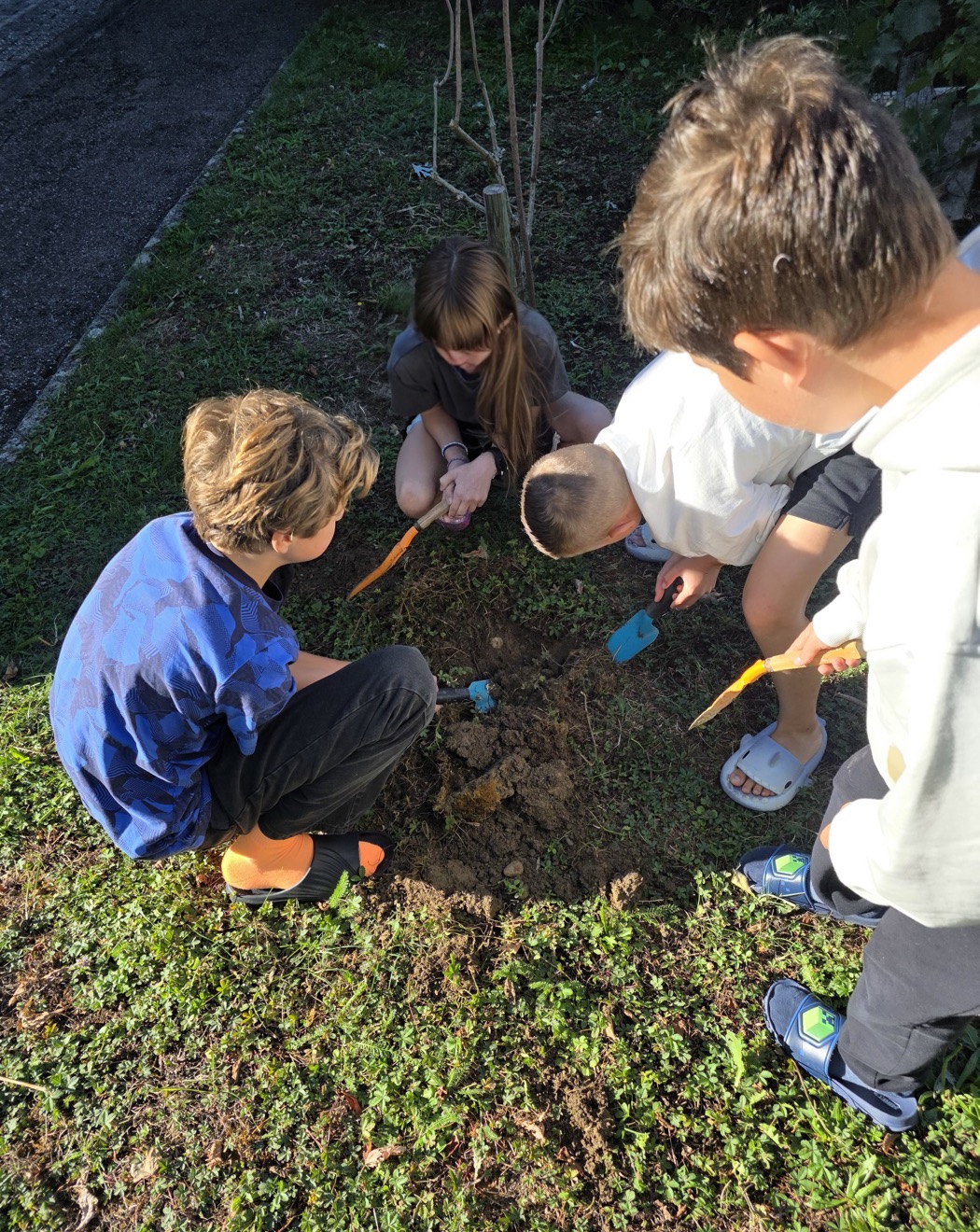
What interested me here was not only the result, but also the process.
How do we organise ourselves as a group? How do we share the tools? How do we take part in a shared project without trying to take up all the space?
So many small social experiences that seem trivial, but that gradually contribute to building the group.
6. An appointment with the future
Once the box was buried, we filled in the hole and planted a stick to mark the spot.
See you in June 2029.
Almost three years separate us from that moment. Three years during which these teenagers will grow, change, discover new things and gradually build their identity.
Why a simple box can help create connection
At first glance, this activity might look like a back-to-school game. But seen through the developmental needs of the adolescent, it takes on another dimension.
A shared story
The group now shares a particular memory. Somewhere in the garden, a box holds a small part of their collective story. Every time they walk past that tree, they will be able to remember this moment.
A project that lasts
By burying this capsule, we weren’t only interested in our present. We also imagined a shared future. The box carries this promise: one day, we will come back together to discover what we left in it.
An experience of cooperation
Digging, carrying, wrapping, burying… Every step required some form of collective organisation. There was no winner or loser. No ranking, no grades. Just a shared goal.
A place for everyone
Each object mattered, not for its material value, but for what it represented to the person who chose it. This distinction seems fundamental to me.
In a society where teenagers are constantly faced with comparison, offering them spaces where they can exist without being assessed is already an important educational act.
Respect for privacy
Finally, this experience allowed us to combine two needs that can seem contradictory: belonging to a group and preserving one’s individuality. The students could share their object while keeping their message secret.
Because building a group doesn’t mean asking everyone to reveal everything. Cohesion should never come at the expense of individuality.
When students become the “people of the past”
There is another dimension of this activity that I particularly like.
In Montessori pedagogy, from elementary level onwards, children discover the history of humanity through cosmic education. They explore the traces left by the civilisations that came before us: tools, objects, writings, remains found beneath the earth.
These discoveries help us understand how human beings lived, what concerned them and how their societies evolved.
With our time capsule, the roles are reversed. This time, it is the students who leave a trace. They are the ones who become, for their future selves, the “people of the past”. And in a few years, they will again be the ones playing archaeologist of their own history.
Just imagine for a moment.
In June 2029, the students who were in Year 7 in September 2026 will be finishing Year 9. Those who were in Year 8 will be reaching the end of their time at middle school.
They will have changed. Their interests may have shifted. Their friendships too. Some will have discovered new passions, overcome difficulties or developed projects they can’t even imagine today.
And yet, somewhere beneath that tree, a small box will hold a trace of who they were. They will find their objects, their messages and perhaps even memories they had forgotten.
Time, a notion that can feel so abstract when studied on a timeline, will become a concrete experience. Something you can touch, observe, talk about. A chance to measure how far you have come.
Why not try it yourself?
The beauty of this activity is that it needs almost no equipment and can easily be adapted to different settings.
In the classroom, it can accompany the start of the school year or mark the beginning of a new cycle. At home, it can become a lovely family ritual, for a birthday, a new year or even a house move.
A few ideas to get you started:
- Choose a symbolic moment. The start of the school year, a birthday or the beginning of a new year can all make lovely starting points.
- Let the children choose. A drawing, a photograph, a small object, a letter… These are their memories and their traces.
- Respect their privacy. If a child wants to keep their message secret, they don’t have to explain themselves.
- Agree on an opening date together. In a year, three years or more, depending on the children’s ages and the context.
- Create a little ritual. Writing the date, closing the box together, choosing where to put it: these gestures help give meaning to the experience.
And if you don’t have a garden, no problem! A box stored on top of a wardrobe can play exactly the same role. What matters is not burying it, but giving it meaning.
With a family, I particularly like the idea of asking everyone to write what they love today, what they would like to learn or what they imagine for the coming year. A year later, the answers might hold a few surprises.
A group has to be cultivated
I don’t believe a single activity can be enough to create cohesion in a class. That would be too simple.
A group is built over time, through disagreements, discussions, shared projects, responsibilities and small everyday gestures.
But I deeply believe in the importance of these collective experiences that give students something to live through together. Experiences in which everyone can find their place, without needing to compare themselves with others.
That morning of 4 September, we didn’t just bury a box. We planted a seed.
And like all seeds, it will need time, attention and a favourable environment to grow.
Perhaps in June 2029, when we dig up this capsule, we will measure not only how much these teenagers have changed, but also everything they have built together.
And you, what would you like to slip into a time capsule with your children or your students? Share your ideas in the comments.
One small Montessori step every day.
— Bouchra